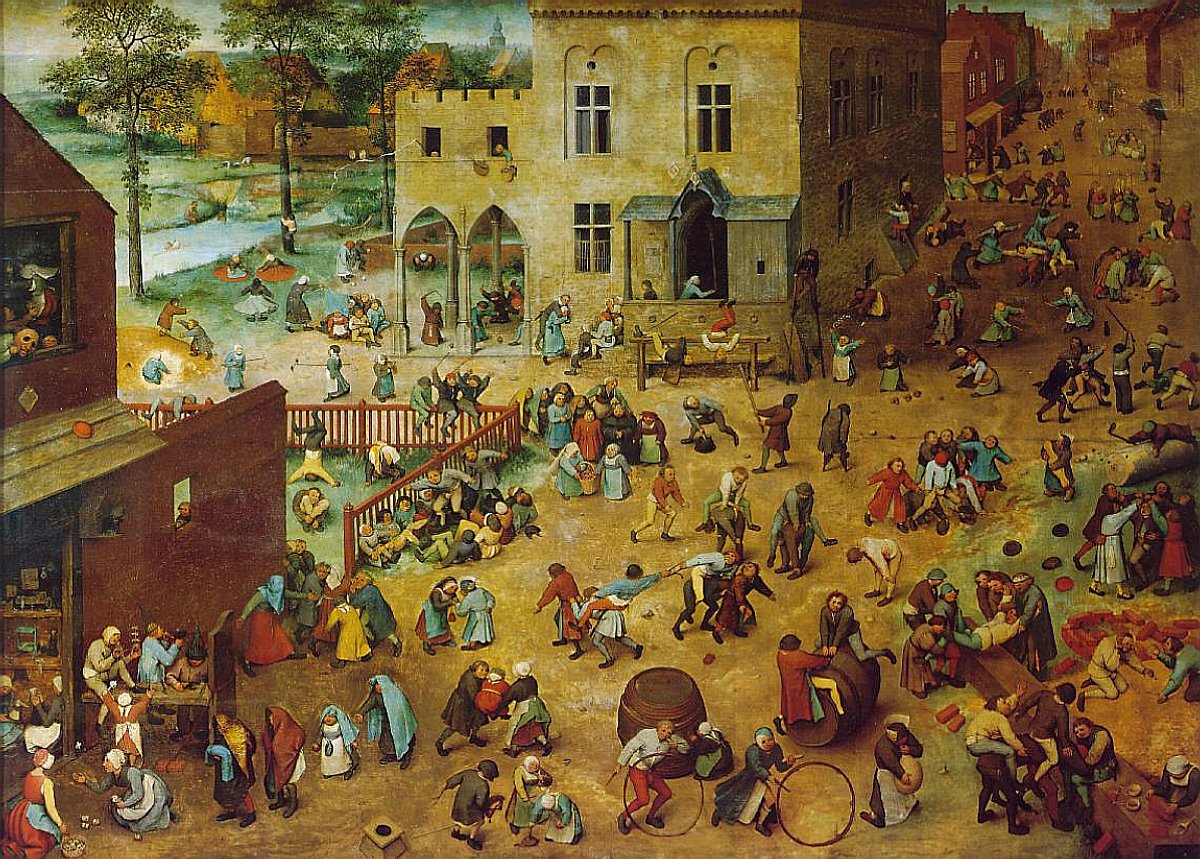
 It is impossible to venture out on the streets of Altdorf without being overrun by children. When I say children it is with the greatest of constraint that I chose such a benevolent word. Brats, racals, even criminals often seem a better word for them, and much better reflects their activities. Even though many children in our fair city begin working at an early age, often helping their parents out with various and sundry tasks, there are many, many who have nothing better to do than spend their time playing on the streets with their various toys.
Of these, wooden weapons seems the most common among the boys. Swords and shields are swung at unprotected heads, or indeed even at the knees of innocent passers-by, in furious battles enacting the war against Chaos. I have also observed a not insignificant group with painted tin soldiers, or troops whittled out of wood. They meet in parks and in public squares all over the city to fight out imaginary battles between the armies of the Empire and the forces of Chaos. A worrying amount of the boys involved in these different war games thoroughly enjoy playing Chaos warriors, and some even run bellowing around Altdorf, scaring women and babies, and panicking horses and cattle! A right nuisance, if you ask me!
And speaking of nuisances, the children of Altdorf seem to have made it their holy mission to remind the rest of the world of their existance; for this they use infernal rattles, pipes, bells, drums or whistles, even horns or trumpets stolen from some unfortunate coach driver add to the cacaphony of sounds of everyday life. Some foolish adults even pay children to come and scare off the ill influences of sickness and disease with their instruments of torture to the ear and sensibilities of educated people! The practice of making this noise seems to be most popular among the girls, for some reason.
Apart from the toys mentioned, the children of Altdorf play with balls made from cloth and inflated pigs’ bladders, playing games that involves much kicking and screaming. They also excel at the game called Nine Kings, where you use a ball to knock over as many of nine pins placed in varying patterns as possible in two tries. Very popular in the more affluent parts of our capital. In the poorer parts of Altdorf the children play with marbles, so called even though they are commonly made from stone or scrap glass or metal.
Adolphus Altdorfer
Bezahltag, Sigmarzeit 33, 2522 IC
While doing some quick research for this piece, I came across the painting Children’s Games by Pieter Bruegel. This paints a much better picture of what an ordinary day in Altdorf can look like, so right-click the image above and save it to disk. Then open it in an image viewer of your choice and take a closer look. It is well worth the extra effort!
Magnus
